Beyond the Bowl: How Namkeen Becomes Part of Everyday Food Moments
There are some foods that have a very specific place in our routine, and then there are foods that seem to fit almost anywhere. Namkeen belongs to the second category. It can be sitting in a bowl on the dining table in the morning, waiting beside a cup of tea in the evening, packed for a journey, offered when a friend suddenly visits, or simply enjoyed by someone standing in the kitchen looking for a quick bite. It does not always need a special occasion, a complicated recipe, or a particular time of day. That flexibility is one of the reasons savory snacks have become such a familiar part of everyday life. A packet of namkeen may look like a simple food product, but once it enters a household, it can become part of many small routines that happen throughout the day. With Zemos, this everyday relationship with snacks becomes even more interesting because the range includes different kinds of sev, mixtures, sticks, chevda and other savory choices, allowing people to choose according to their mood rather than following one fixed way of eating.
When people think about snacks, they often imagine a bowl placed in the middle of a table. But the real life of a snack goes far beyond that bowl. It begins when someone opens the packet, continues when another person takes the first handful, and often becomes connected with a conversation, a break, a journey, a television show, a work session, or a family moment. Sometimes the snack is the main attraction, and sometimes it is simply there in the background while something else is happening. That is what makes namkeen different from many foods that are associated with a particular meal. Breakfast has its own expectations, lunch has its own routine, and dinner usually marks the end of the day. Snacks are more flexible. They can appear between these moments and fill the spaces in between. This flexibility is not just convenient; it has helped savory snacks become part of the rhythm of everyday households.
The Snack Moment Is Often Unplanned
One of the most interesting things about snacking is that it is not always planned. A person may finish work and suddenly feel like having something crunchy. A student may take a break from studying and reach for a snack. Someone watching television may realize that a bowl of namkeen would make the evening more enjoyable. Guests may arrive without much notice, and a packet kept in the kitchen suddenly becomes useful. These moments are ordinary, but they happen repeatedly, and over time they become part of the household routine.
This is where the convenience of packaged namkeen becomes meaningful. People do not always have the time or desire to prepare something from scratch whenever they want a snack. Having a ready option available means the decision becomes simple: open, serve and enjoy. There is no need to turn a small craving into a major kitchen task. For busy households, this can make a difference because everyday life is already filled with enough planning. A convenient snack allows people to enjoy a small food break without adding another complicated activity to their schedule.
The beauty of these unplanned snack moments is that they often become some of the most natural parts of the day. There is no formal announcement that snack time has started. Someone simply brings a bowl into the room, another person takes a handful, and suddenly everyone is sharing. These moments can happen between conversations, during a short break, or while finishing another activity. Namkeen fits comfortably into these situations because it does not demand a lot of attention. It can be enjoyed casually while the rest of life continues around it.
From Kitchen Shelf to Dining Table
A snack becomes part of a household when it is easy to access. This is why where a product is kept can sometimes matter almost as much as what the product is. A packet stored in a convenient place can become the first thing someone reaches for when they want something quick. A bowl placed on the dining table can encourage family members to share it. A small container kept in the kitchen can become a familiar part of the household's food routine.
Zemos snacks can naturally fit into this kind of everyday setup. Different products can be kept available depending on the preferences of the family. Someone may enjoy Ratlami Sev, another person may prefer Bhavnagri Gathiya, while someone else may reach for Poha Chevda or a crunchy snack such as Corn Sticks or Crunchies. The important point is not that everyone has to choose the same product. The real advantage of having a range is that everyone can find something that suits the moment.
This makes namkeen especially useful in homes where family members have different tastes. Instead of preparing separate snacks for every person, a household can keep a few varieties available and allow everyone to choose. It creates a more relaxed approach to snacking and removes the pressure of finding one food that satisfies every preference.
Why the Same Snack Can Feel Different in Different Moments
The interesting thing about food is that the experience is not created only by the food itself. The situation around it also matters. The same bowl of namkeen can feel completely different depending on when and where it is eaten. A handful enjoyed during a quiet afternoon break can feel comforting. The same snack shared with friends during a conversation can feel more lively. A bowl served during a family movie can become part of the entertainment. A packet opened during a road trip can become connected with the memory of that journey.
This is why talking only about taste does not completely explain why people enjoy snacks. Taste matters, of course, but so do timing, company, atmosphere and habit. A snack can become associated with particular moments without anyone deliberately deciding that it should. Over time, these repeated experiences create familiarity.
For example, a person who regularly enjoys a certain namkeen while working may eventually associate that snack with their work break. Someone who eats it with family on weekends may connect it with relaxed Sundays. Another person may keep it for travel because it is easy to carry and serve. The product remains the same, but the experience around it changes.
That ability to fit into different situations is one of the strongest qualities of a good everyday snack.
A Bowl Can Start a Conversation
Food has a natural ability to bring people into the same space. A bowl placed in the centre of a table does something very simple: it gives everyone a reason to reach toward the same place. One person takes a little, another person asks what the snack is, and someone else recommends their favorite variety. Suddenly, a small food item becomes part of a conversation.
This happens naturally in families, offices, classrooms, travel groups and social gatherings. People do not need to plan a conversation around namkeen. The snack simply becomes part of the environment.
There is also something enjoyable about offering food to another person. Passing a bowl, asking someone to try a new flavor, or keeping a snack ready for a guest are small gestures, but they make everyday interactions warmer. This is one reason namkeen continues to appear in so many social situations. It is easy to share, easy to serve and familiar to many people.
A good snack does not have to dominate the moment. Sometimes its role is simply to make the moment more comfortable.
Different People, Different Snack Habits
Every person has their own way of snacking. Some people like to eat slowly, taking a few pieces at a time. Others prefer a generous handful. Some enjoy spicy flavors, while others look for a milder taste. Some people snack while working, others only during breaks, and some keep snacks specifically for guests or family occasions.
This variety is why having different types of namkeen at home can be useful. A household does not need to follow one universal snack routine. Instead, it can create a small collection that reflects the people living there.
For example:
- For individual breaks: keep a preferred snack ready for quick, casual eating.
- For sharing: serve two or three different varieties so everyone can choose according to their taste.
The important thing is flexibility. Snacks should fit into people's routines rather than forcing people to change their routines around the snack.
The Role of Texture in the Everyday Snack Experience
When people describe a snack, they often talk about its taste first. But texture is just as important. The crunch of a snack can change the entire experience. A crispy bite feels different from a soft bite, and a mixture of textures can make a snack more interesting from one handful to the next.
This is particularly noticeable with namkeen because the category includes so many different shapes and textures. Sev, gathiya, chevda, sticks and mixtures can all provide completely different eating experiences. Some are fine and delicate, some are thicker, some are crisp, and some combine several ingredients together.
This means that choosing a snack is not always about choosing a flavor. Sometimes people choose based on the feeling they want from the food. When someone says, “I want something crunchy,” they are already thinking about texture before they think about a particular product.
That simple observation helps explain why snacks remain exciting even when people eat them regularly. The experience is not limited to seasoning. Shape, crunch and mouthfeel all contribute to how a snack is remembered.
When One Packet Becomes Many Possibilities
One of the advantages of a packaged snack is that it can be used in different ways depending on the household. It can be served directly from the packet when convenience is the priority, or transferred into a bowl when people are sitting together. It can become part of a larger snack spread, or it can simply be kept aside for someone who wants a quick bite later.
The product does not have to dictate the occasion. The household decides how it fits.
This is especially useful for people with changing schedules. A family may have breakfast together on one day and eat at different times the next. A working professional may have a quiet evening one day and a busy evening the next. Students may have completely different schedules during exams compared with regular college days. Having a snack that can move easily between these different routines makes it more useful.
This is where Zemos can become part of everyday food habits rather than being limited to one specific occasion. The wide range of products gives consumers the freedom to choose something different depending on what they want at that moment.
Snacks and the Small Breaks We Often Need
Modern life is full of long stretches of activity. People work for hours, students study for long periods, families manage household responsibilities, and travel can take up large parts of the day. Between these larger activities are small breaks. These breaks may last only a few minutes, but they can provide an opportunity to step away from a task and reset.
A snack can naturally become part of that pause.
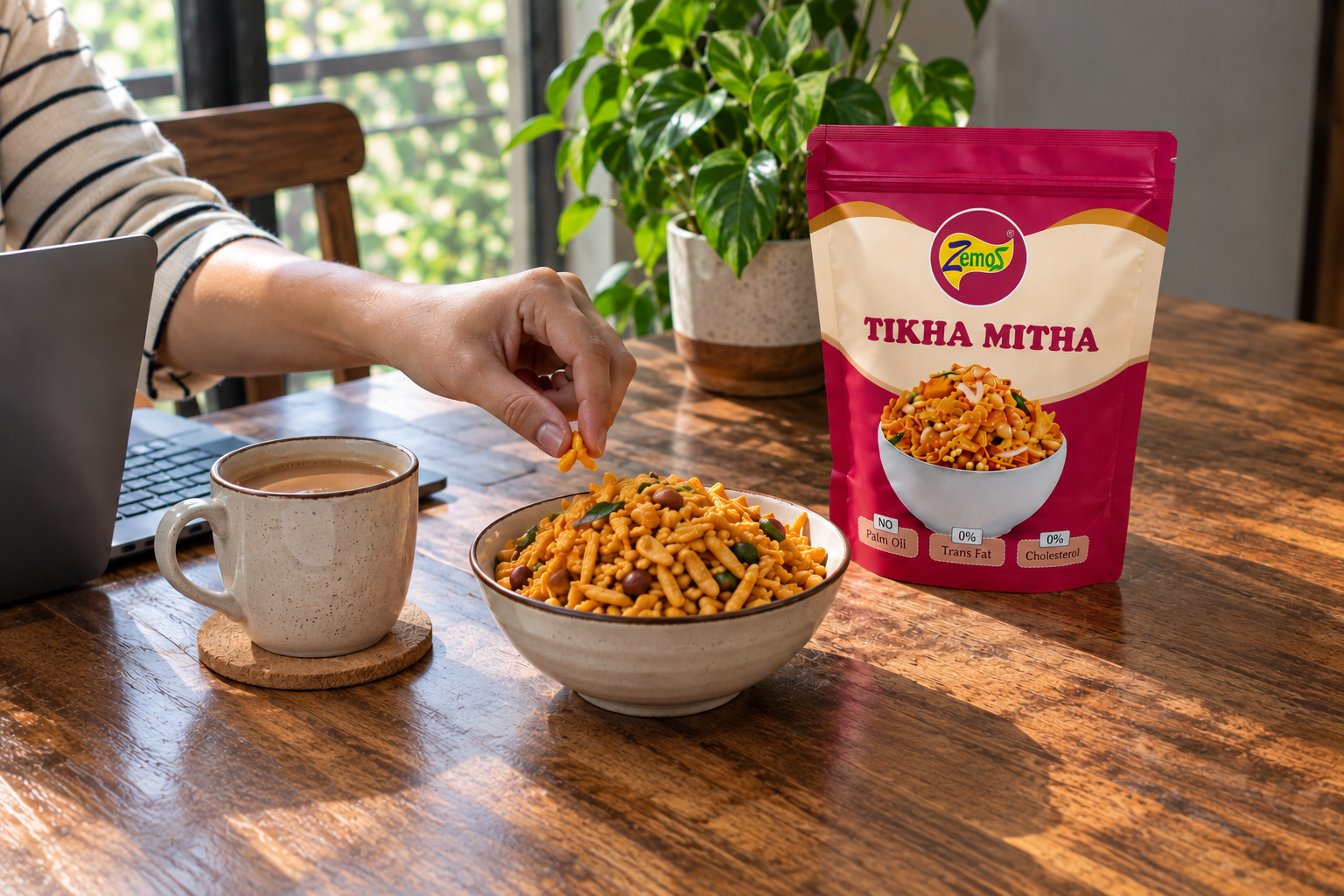
There is no need to make the break elaborate. A glass of water, a cup of tea or coffee, and a small bowl of namkeen may be enough. The value comes from stopping for a moment rather than continuing without interruption. A simple snack can make that break feel more intentional.
This is one reason people often remember their favorite snacks in connection with specific routines. The food becomes part of the pause itself.
The Weekend Snack Has a Different Personality
Weekdays are usually driven by schedules. Weekends often feel more flexible. There may be more time for family members to sit together, watch something, talk, or simply enjoy a slower afternoon. Snacks naturally fit into these slower moments.
A bowl of namkeen on a weekend table can remain available while people move between conversations and activities. Someone may take a handful while reading, another person may snack while watching television, and children may return to the bowl several times during the afternoon.
There is no pressure to finish the snack at a particular time. That relaxed approach is part of what makes weekend snacking enjoyable.
For families, these casual moments can also become traditions. A particular snack may become associated with Sunday afternoons, movie nights, or visits from relatives. The tradition does not need to be formally created. It can develop naturally through repetition.
From Individual Cravings to Shared Moments
Snacking often begins as an individual decision: “I want something to eat.” But it can quickly become a shared experience. One person opens a packet, another asks for some, and soon the snack is being passed around.
That transition from individual craving to shared moment is one of the most interesting things about namkeen.
It is also why serving presentation can matter even when the food itself is simple. A snack poured into a bowl feels different from a packet sitting unopened on a shelf. The bowl signals that the food is ready to share. It creates an invitation.
At home, this can make an ordinary evening feel a little more welcoming. When guests arrive, it can make hospitality easier. During celebrations, several bowls can create a relaxed snack area where people can help themselves.
The food remains simple, but the way it is offered changes the experience.
Why Zemos Fits Into This Everyday Approach
Zemos Foods offers a broad range of namkeen and savory snacks, giving households multiple ways to bring variety into everyday eating. From sev and gathiya to Poha Chevda, mixtures and crunchy snack varieties, the range allows different family members to choose according to their preferences.
The value of such a range is not only the number of products available. It is the freedom it gives people to create their own snack habits. One family may prefer a particular product during evening breaks, while another may keep a mixture available for weekends. Someone travelling may choose a convenient packaged option, while another person may enjoy a bowl during a relaxed conversation at home.
There is no single correct way to enjoy namkeen. That is exactly what makes the category so flexible.
For Zemos, this creates an opportunity to become part of real everyday moments rather than being associated with only one occasion. The brand can sit comfortably in the kitchen, on the dining table, during a break, in a travel bag, or beside a cup of tea because savory snacks naturally move between different parts of life.
The Best Snack Moments Are Often the Simplest
We sometimes think that memorable food experiences have to involve elaborate meals, special restaurants or celebrations. But many food memories are created by simple things. A bowl shared during a conversation, a snack enjoyed while watching a favorite program, something crunchy eaten during a study break, or a packet opened during a journey can become connected with a particular period of life.
The simplicity is what makes these moments genuine.Namkeen does not need a special introduction. It does not require complicated preparation. It simply needs to be available when someone wants it. That ease is one of the reasons it has remained relevant across different generations and changing lifestyles.A snack can be ordinary and still be meaningful.
Creating Your Own Everyday Snack Routine
There is no need to create a complicated schedule for snacking. A simple approach is enough. Keep a few preferred varieties available, understand what different family members enjoy, and choose products that fit naturally into the household's routine.
Instead of buying snacks only when guests are coming, households can also keep them available for everyday moments. This changes the way people think about namkeen. It becomes less about waiting for an occasion and more about enjoying the small occasions that happen naturally.
A quick afternoon break can become a snack moment. A weekend conversation can become a sharing moment. A family movie can become a bowl-on-the-table moment. A long journey can become a crunchy travel moment.
These moments may seem small individually, but together they form the everyday food story of a household.
Conclusion: Namkeen Is More Than What Is in the Bowl
A bowl of namkeen may look simple, but the moments surrounding it can be surprisingly varied. It can be enjoyed alone or shared with others. It can accompany a break, become part of a conversation, fit into a journey, sit beside a cup of tea, or simply satisfy the desire for something crunchy.
That flexibility is what makes savory snacks so useful in everyday life. They do not belong to only one meal or one type of occasion. They move naturally between different parts of the day, adapting to the routines and preferences of the people enjoying them.
For a brand like Zemos, this everyday role creates something more meaningful than simply offering a range of snacks. It creates the opportunity for products to become part of real household habits. A packet kept in the kitchen can become a familiar choice. A bowl placed on the table can become part of a conversation. A snack carried on a journey can become part of a memory. A handful enjoyed during a short break can make an ordinary moment feel a little more enjoyable.
And perhaps that is what makes a good namkeen special. It does not need to be the centre of attention. It simply needs to be there when the moment feels right.
Because some of the best food moments are not planned—they happen one handful at a time.