What Consumers Should Check on a Namkeen Packet Before Buying
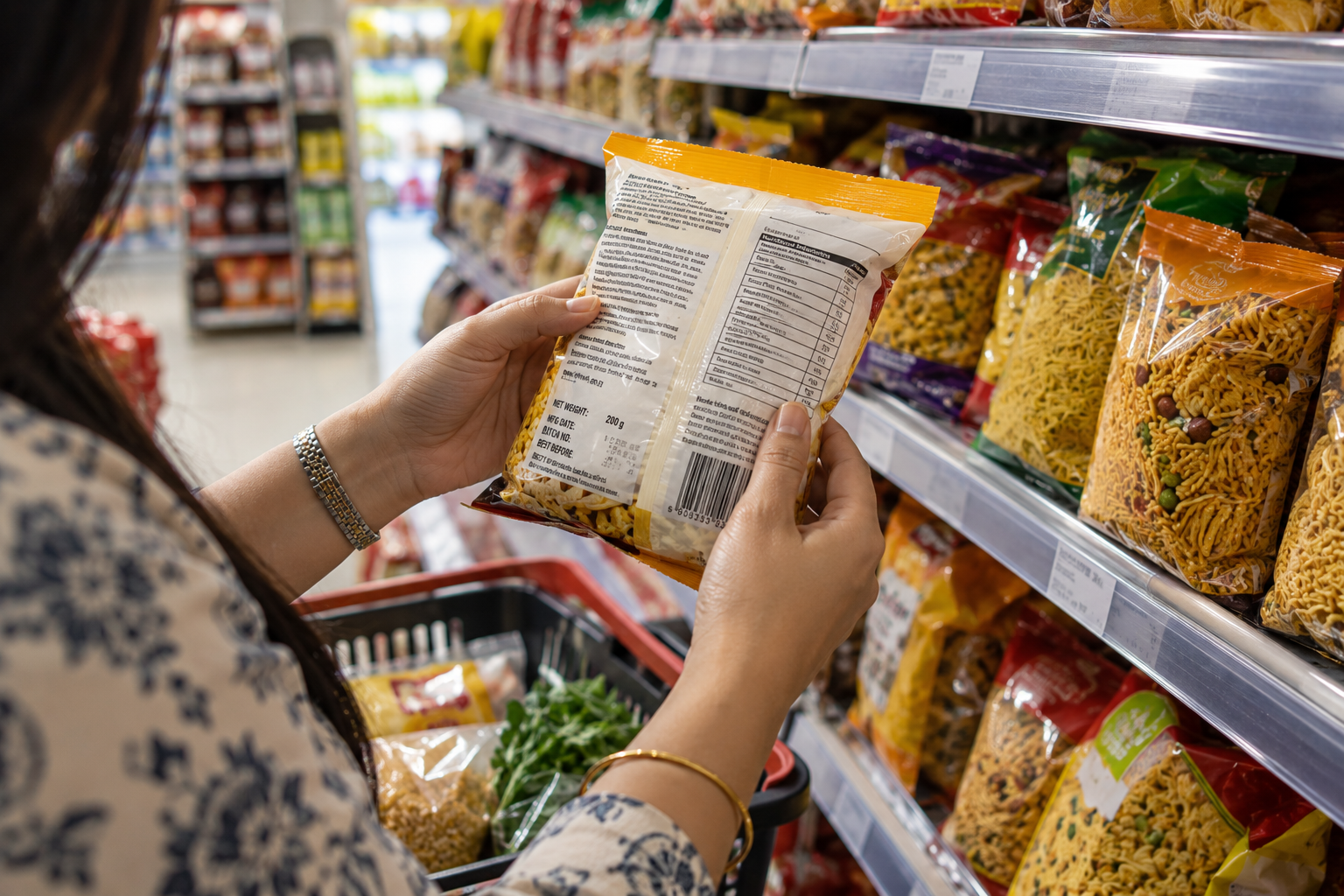
When choosing a packet of namkeen, most people naturally look at the flavour first. A familiar name such as Ratlami Sev, Aloo Sev, Poha Chevda or Tikha Mitha can immediately catch attention, but there is more to choosing a packaged snack than simply deciding what sounds tasty. The information printed on the packet can tell consumers useful things about the product, including what it contains, how much is inside, who manufactured it, and how long it is intended to remain suitable for consumption. In India, food labelling rules require important information to be provided on pre-packaged foods, making the label an important source of information rather than just part of the packaging design.
For someone standing in a supermarket, grocery store or even browsing packaged namkeen online, learning how to read this information can make the buying process simpler. You do not need to study every number or understand complicated food terminology. A few basic details can help you understand the product before putting it into your shopping basket. This is particularly useful when there are several similar-looking snack options available. Two packets may both contain sev or mixture, but their ingredients, flavour profile, quantity, manufacturer information and other product details can be different. Taking a few seconds to look beyond the front of the packet can therefore help you make a more informed choice.
Start With the Name of the Namkeen
The first thing to check is surprisingly simple: what exactly is the product? The name should clearly identify the food inside the package. FSSAI guidance includes the name of the food among the information required on packaged foods, and standards for Indian namkeens also specify labelling requirements for the product name and category.
This matters because Indian namkeen covers a very wide range of products. Sev, gathiya, chevda, mixtures, potato-based snacks and other savouries can have completely different ingredients and eating experiences. Even within one category, products can vary considerably. Ratlami Sev, for example, has a different spice profile from Aloo Sev, while Poha Chevda is based around flattened rice and commonly includes ingredients such as peanuts and seasonings. Zemos currently offers a broad range including Medium Sev, Poha Chevda, Ratlami Sev, Aloo Sev, Bhavnagri Gathiya, Tikha Mitha, Hot Mix and several other varieties.
Instead of choosing only because a packet looks attractive, identifying the exact snack first gives you a clearer idea of what you are purchasing. This becomes especially helpful when buying several varieties for a family because you can select different products according to flavour and texture preferences rather than accidentally purchasing similar snacks.
Look at the Ingredient List
The ingredient list is one of the most useful sections on a packaged food label. FSSAI's labelling guidance states that ingredients are to be declared, with ingredients generally listed in descending order of their composition by weight or volume at the time of manufacture.
For a namkeen buyer, this section provides a simple way to understand what goes into the product. Depending on the variety, you may see ingredients such as gram flour, rice flakes, pulses, peanuts, potatoes, spices, edible oil and seasonings. The exact combination naturally changes from one product to another. A sev-based snack will have a different ingredient profile from a poha-based mixture, just as a potato-based namkeen will differ from a grain or pulse-based snack.
Reading the ingredient list is particularly useful when you are trying different brands or different varieties for the first time. The front of the packet is designed to introduce the product, but the ingredient section gives you more specific information. It allows you to understand the basic composition of the snack instead of relying only on photographs or promotional wording.
Check the Nutrition Information
Nutrition information is another important part of a packaged food label. FSSAI's food-labelling material includes nutritional information among the required label information for pre-packaged foods.
For consumers, the useful approach is not to become overwhelmed by every number. Instead, look at the information as a way of understanding the product in context. Depending on the label, nutritional information can help you see values such as energy and nutrients for the stated quantity. This can be particularly useful when comparing products or deciding how much of a snack fits into your normal eating routine.
A packet of namkeen is generally purchased as a snack rather than as a complete meal, so the quantity you actually eat matters as well. Someone may purchase a large packet for several family members, while another person may choose a smaller pack for occasional snacking. Looking at the nutritional information alongside the serving or quantity information can help consumers understand what they are buying instead of judging the product only by its appearance.
Pay Attention to Net Quantity
The size of a packet can sometimes create an impression that it contains more or less food than it actually does. That is why checking the net quantity is useful. Net quantity is among the information required on packaged food labels.
This is a particularly practical point when comparing two namkeen packets. A larger-looking pouch does not automatically mean that it contains proportionally more snack. Similarly, a smaller packet may be designed for a different consumption occasion. Looking at the stated quantity gives you an objective number that can be compared between products.
For households, this can also make shopping easier. If namkeen is being purchased for regular family consumption, the quantity can be considered alongside how quickly the household normally finishes a packet. For occasional use, a smaller quantity may make more sense. The important point is simply to look at the actual quantity rather than judging only by the physical appearance of the packaging.
Check the Date Before Buying
The manufacturing or packing date and the applicable best-before or use-by information are also important details to notice. FSSAI's labelling requirements include date marking among the information provided on packaged foods.
This is especially relevant when buying namkeen from a retail shelf. Consumers should take a moment to locate the date information and check it before purchasing. It is an easy step, but it can be overlooked when someone is focused mainly on choosing a favourite flavour.
For products that are purchased in larger quantities, checking the dates becomes even more useful. If you are buying several different varieties at once, looking at the dates can help you plan which products to open first and which ones can remain unopened for later.
Check the Manufacturer Information
A packaged snack label also provides information about the manufacturer or responsible food business. FSSAI labelling guidance includes the name and complete address of the manufacturer among the information associated with pre-packaged foods.
For consumers, this information provides useful product identification. If you enjoy a particular namkeen and want to purchase it again, knowing the manufacturer makes it easier to identify the same brand and product. It can also be useful when consumers want to contact a company regarding a product question or feedback.
For a brand such as Zemos, this connection between the product and the manufacturer is particularly relevant because Zemos identifies itself as a Gujarati namkeen manufacturer based in Vadodara and offers its products through retail, wholesale and B2B channels.
A Simple Packet-Checking Habit
You do not have to spend several minutes reading every packet in detail. A simple habit can make the process much easier:
- Check the product name, ingredients, quantity and date.
- Then look at nutrition information and manufacturer details when you need more information.
This small routine can be useful whether you are buying a familiar packet of sev or trying a new namkeen for the first time. It also makes comparison easier when several products are sitting next to each other on a supermarket shelf.
Why Reading the Packet Matters
The purpose of reading a namkeen packet is not to make snack shopping complicated. It is actually the opposite. Once consumers know where to find important information, choosing becomes quicker and more straightforward. The front of a packet may tell you the name and flavour, while the back or side can provide additional information about ingredients, nutrition, quantity, dates and the manufacturer. FSSAI guidance emphasizes that required label information should be clear and readily legible to consumers.
Namkeen is a category with enormous variety, and that variety is one of the reasons it remains popular. A consumer might want the strong spice of Ratlami Sev on one day, the familiar crunch of Aloo Sev on another, or the lighter combination of flattened rice, peanuts and seasonings found in Poha Chevda. Zemos' current product range reflects this variety, with products spanning sev, chevda, mixtures, sticks and other Indian savoury snacks.
Ultimately, choosing packaged namkeen can be as simple as knowing what to look for. The product name tells you what you are buying, the ingredients explain what goes into it, the nutrition panel provides additional information, the net quantity tells you how much is in the pack, and the date and manufacturer details help you understand the product more completely. These details may not be as eye-catching as the front of a colourful namkeen packet, but they are valuable when making everyday food choices.
A good snack experience begins before the first bite. It begins when you pick up the packet, know what you are looking at, and choose a product that matches what you are looking for. For Indian namkeen lovers, that simple habit can make everyday snack shopping more informed while still keeping the enjoyable part exactly where it belongs — with the flavour, crunch and variety of the snack itself.