Why Namkeen Holds a Special Place in Indian Food Culture
Namkeen is more than just a snack in Indian homes. It is a familiar part of everyday life, celebrations, family conversations, festivals, travel, hospitality, and countless small moments that bring people together. From a simple evening cup of tea to a festive gathering filled with relatives, a bowl of namkeen often finds its place naturally on the table.
Its popularity comes from the combination of taste, variety, convenience, and the memories associated with sharing food. Unlike many foods that are reserved for a particular meal or occasion, namkeen can be enjoyed at almost any time of the day.
It can be served to an unexpected guest, packed for a journey, kept ready for children after school, or placed alongside tea when family members sit together in the evening.
Over time, namkeen has become closely connected with the way people welcome guests, celebrate special occasions, and enjoy everyday conversations. This deep connection explains why namkeen continues to hold a special place in Indian food culture even as eating habits, lifestyles, and food preferences continue to change.
Namkeen and the Everyday Indian Home
One of the strongest reasons namkeen remains important is its connection with everyday household life. In many Indian homes, there is often a dedicated place for snacks in the kitchen or pantry, and namkeen is one of the foods that families like to keep available.
It does not require elaborate preparation before serving, which makes it particularly useful when someone wants something quick and enjoyable. A bowl placed on the dining table can instantly turn an ordinary tea break into a more inviting moment.
The appeal is not limited to one generation either. Children may enjoy crunchy snack sticks or mildly seasoned varieties, while adults may prefer sev, mixtures, or snacks with stronger spices.
Older family members may have their own preferred varieties based on the flavors they have enjoyed throughout their lives. This ability to fit naturally into different preferences is one of the reasons namkeen has remained relevant across generations.
The everyday presence of namkeen also reflects an important characteristic of Indian food culture: food is often connected with interaction. Eating is rarely only about satisfying hunger.
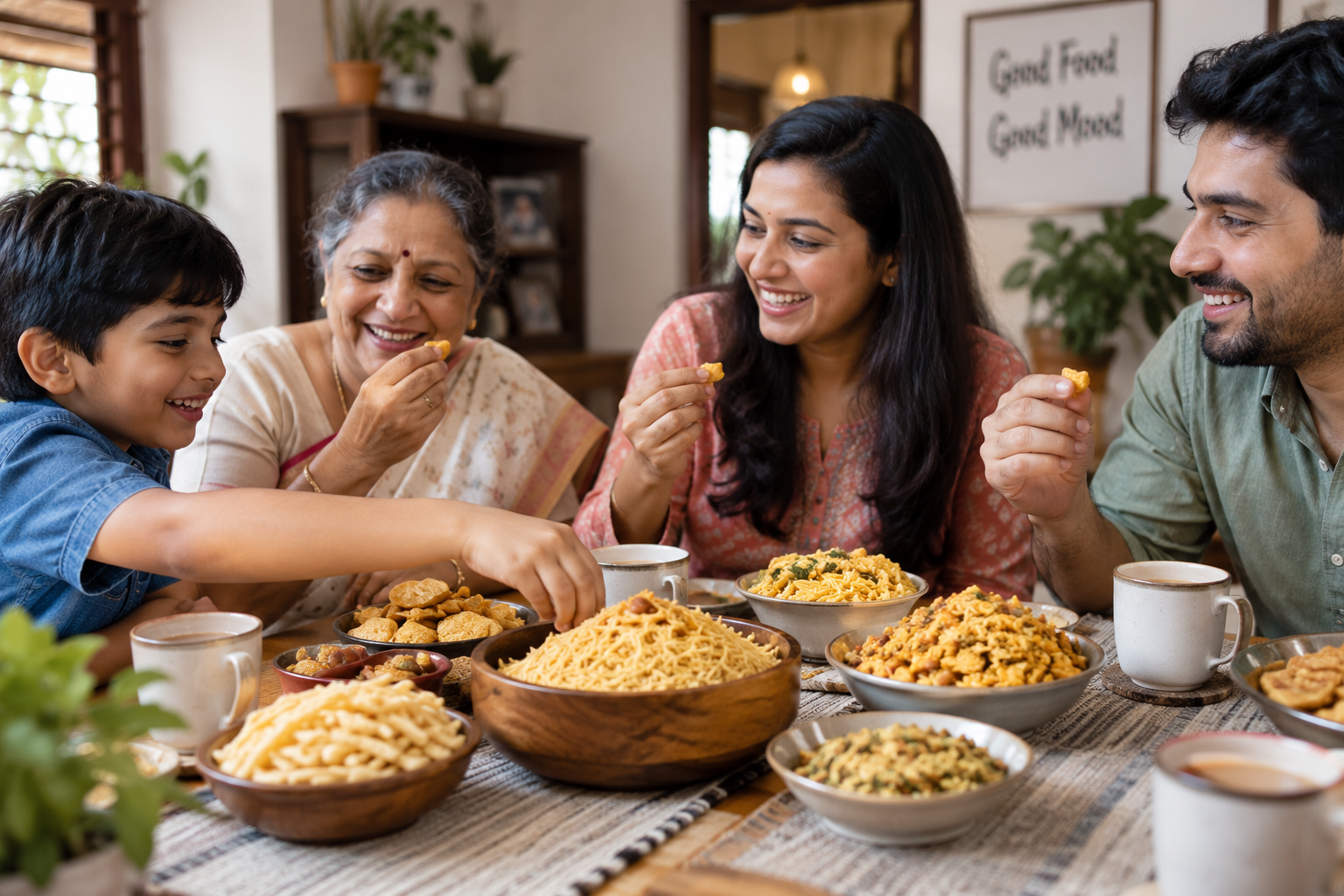
A snack can become an excuse to sit together, talk about the day, discuss family matters, watch television, or simply spend a few quiet minutes with a cup of tea. Namkeen fits beautifully into these situations because it is easy to share.
A large bowl placed in the middle of the table encourages everyone to take a little, pass it around, and continue the conversation. These simple moments may seem ordinary, but they are exactly the kinds of experiences that build food memories within families.
The Cultural Meaning of Sharing Snacks
Sharing food has always been an important part of Indian social life, and namkeen naturally fits into this tradition. When guests arrive at a home, offering something to eat or drink is often considered a warm gesture of hospitality.
Tea accompanied by a bowl of namkeen is one of the simplest combinations, yet it can make visitors feel welcome. The snack does not need to be complicated or expensive. What matters is the gesture of offering something while people sit and talk.
This tradition becomes even more visible during family gatherings. When relatives meet after a long time, the dining table or living-room table often becomes a place where conversations continue for hours.
Plates and bowls of snacks are passed around while people discuss memories, work, studies, travel, weddings, festivals, and family news. Namkeen becomes part of the atmosphere rather than simply another food item.
Its crunchy texture, familiar seasoning, and easy-to-share nature make it suitable for long conversations where people may take small portions over an extended period.
The same idea can be seen during visits to relatives. A guest may be offered tea, sweets, fruit, or namkeen depending on the occasion. In many households, keeping snacks ready for visitors is simply part of being prepared.
This is one reason packaged namkeen has become particularly convenient for modern families. It allows households to keep different snack options available without having to prepare something from scratch every time someone arrives.
Regional Flavours Make Namkeen Special
India's diverse food culture has played a major role in shaping the variety of namkeen available today. Different regions have their own preferred ingredients, seasoning styles, textures, and snack traditions.
This regional diversity means that the word "namkeen" does not describe just one type of food. It represents a broad world of flavors and preparations.
In one region, people may prefer a spicy sev-based mixture, while another may have a stronger preference for gathiya, roasted snacks, or a particular type of mixture. Ingredients such as gram flour, lentils, peanuts, spices, curry leaves, rice-based components, and different types of flour can create completely different snack experiences. Even when two snacks look similar, their seasoning and texture can make them taste very different.
Regional preferences also influence the way people introduce snacks to younger generations. Parents and grandparents often serve the snacks they grew up eating, allowing children to become familiar with family favorites.
A particular namkeen may remind someone of their hometown, a family function, or a visit to grandparents. In this way, food becomes a connection between places, generations, and memories.
Namkeen therefore represents something larger than variety. It shows how Indian food culture allows different regional traditions to coexist while continuing to evolve. People can enjoy familiar local flavors while also trying snack varieties from other parts of the country.
Namkeen at Festivals and Celebrations
Festivals are another important reason namkeen has such a strong place in Indian food culture. Indian celebrations are often associated with elaborate meals, sweets, homemade dishes, and snacks prepared for family and visitors.
While sweets receive considerable attention during festive occasions, savory snacks provide balance and variety to the food table.
During festivals, homes may welcome relatives, friends, neighbors, and other visitors throughout the day. Having ready-to-serve snacks makes it easier for hosts to offer something to everyone.
A bowl of namkeen can sit alongside sweets, tea, or other refreshments, giving guests another flavor option. It also works well when people want something savory between meals.
Festive snack traditions are not limited to major celebrations. Birthdays, anniversaries, housewarming events, family reunions, office celebrations, and casual get-togethers can all include namkeen.
The snack can be served in decorative bowls, arranged on a larger platter, or combined with other foods to create a colorful snack table.
What makes namkeen especially useful during celebrations is its ability to serve many people without complicated preparation. Hosts can focus on decorating the home, preparing other dishes, welcoming guests, and spending time with family rather than constantly preparing small snacks.
Tea and Namkeen: A Familiar Combination
For many people, the connection between tea and namkeen is one of the most recognizable snack traditions. The warmth of tea combined with the crunchy texture and savory seasoning of namkeen creates a simple pairing that works throughout the day. Morning tea, afternoon breaks, evening conversations, and visits from friends can all become occasions for this combination.
Tea and namkeen also represent the idea of taking a break. In a busy routine, people may not have time for a full meal or elaborate snack preparation. A cup of tea and a small serving of namkeen can create a few minutes to pause and relax. Families may gather in the evening, colleagues may take a short break at work, and friends may meet over tea. The food is simple, but the experience can be meaningful.
The popularity of this pairing also demonstrates how Indian snacking habits are influenced by routine. Certain foods become associated with particular moments, and namkeen has successfully become part of many of these daily rituals.
Why Variety Keeps Namkeen Relevant
Another important reason namkeen remains popular is the enormous range of choices available. Consumers do not have to rely on one flavor or one texture.
They can select something spicy, mild, tangy, crunchy, light, or richly seasoned depending on their mood and occasion.
This variety makes namkeen suitable for different members of a household. A family does not necessarily need to agree on one snack because different varieties can be kept at home.
Someone may choose sev, another person may prefer a mixture, while children may enjoy snack sticks or other crunchy options.
Some of the qualities that make namkeen easy to include in different eating occasions are:
- A wide range of flavors and textures makes it easier to match different preferences.
- Easy serving and convenient storage make packaged snacks practical for busy households.
The availability of different varieties has also helped namkeen move beyond traditional household consumption. Today, people enjoy packaged savory snacks while travelling, working, studying, watching entertainment, attending gatherings, or simply relaxing at home.
Namkeen and Family Memories
Food memories are powerful because they connect taste with people and places. A familiar flavor can remind someone of childhood, a festival at home, a grandparent's kitchen, or an evening spent with siblings.
Namkeen often becomes part of these memories because it is present during ordinary moments as well as special occasions.
For example, someone may remember sitting with their family during summer vacations while a large bowl of snacks was kept on the table. Another person may associate a particular mixture with festive visits to relatives. Someone living away from home may buy a familiar snack because its flavor reminds them of their family or hometown.
These emotional associations help explain why certain snacks continue to be loved even when people have access to countless new food choices.
The role of older family members is particularly important in passing these preferences forward. Grandparents and parents often introduce younger family members to snacks that have been part of the household for years.
The younger generation may later discover new flavors, but familiar favorites often remain part of their food memories.
The Changing Role of Namkeen in Modern Lifestyles
Although namkeen has deep roots in traditional food culture, its role continues to evolve with modern lifestyles. Families today often have busier schedules, more work commitments, changing household structures, and less time for elaborate daily cooking.
These changes have increased the importance of convenient food options.Packaged namkeen fits naturally into this environment because it can be kept ready for different occasions.
It can be stored in the pantry and served whenever needed, whether that means an evening snack, a quick bite during work, a family gathering, or an unexpected visit from guests.
At the same time, modern consumers are becoming more conscious about what they purchase. They may pay greater attention to ingredients, packaging information, portion sizes, product quality, and the overall eating experience.
This means that the packaged snack category is no longer only about providing something crunchy. Consumers increasingly look for products that fit their preferences and lifestyles while still delivering enjoyable taste and texture.
Brands such as Zemos can therefore connect with consumers by offering a variety of familiar snack choices that fit into modern routines while maintaining the character people expect from savory snacks.
Namkeen as a Part of Hospitality
Hospitality is one of the strongest cultural connections associated with namkeen. When someone visits an Indian home, offering refreshments is often an automatic part of welcoming them.
The refreshments may vary according to the household and occasion, but savory snacks frequently have a place on the table.
This tradition is particularly convenient when packaged snacks are available. A host can quickly open a pack, transfer the snack into a serving bowl, and offer it with tea or another beverage. There is no need to interrupt a conversation or spend significant time preparing food.
The importance of this small gesture should not be underestimated. Offering food communicates warmth and consideration. Even a simple bowl of namkeen can turn a short visit into a more comfortable and enjoyable experience.
Namkeen Beyond the Home
Namkeen has also become a popular companion for travel and social activities. Long journeys often require snacks that are easy to carry and share.
Families may pack savory snacks for road trips, train journeys, picnics, or visits to relatives. Students and working professionals may keep packaged snacks available for moments when they need a convenient option during a busy day.
Its portability makes namkeen suitable for situations where preparing food is difficult. It can be packed into a travel bag, served during a break, or shared among friends.
This flexibility has helped traditional snack preferences remain relevant even as lifestyles become increasingly mobile.
The Balance Between Tradition and Modern Snacking
One of the most interesting aspects of namkeen is its ability to balance tradition with modern convenience. The basic idea of enjoying a savory snack has existed across generations, but the way people purchase, store, serve, and consume these snacks has changed considerably.
Earlier, families may have relied more heavily on homemade preparations or snacks purchased from local shops. Today, packaged namkeen offers convenience and consistency while still providing familiar flavors and textures.
This does not necessarily replace traditional food habits; instead, it gives families another way to enjoy snacks within changing routines.
The continued popularity of namkeen shows that food traditions do not have to remain exactly the same to survive. They can adapt to new lifestyles while preserving the experiences and flavors that make them meaningful.
Why Namkeen Will Continue to Be Part of Indian Food Culture
As food trends continue to change, namkeen is likely to remain relevant because it fulfills several different roles at once. It is an everyday snack, a hospitality item, a travel companion, a festive food, a tea-time favorite, and a reminder of family traditions.
Few snack categories are connected to so many different parts of daily life.Its strength also comes from adaptability. New flavors and formats can appear while familiar varieties continue to attract consumers.
Younger generations can explore new snack combinations while still enjoying the varieties their parents and grandparents preferred. This creates a continuous relationship between old and new food habits.
Namkeen is therefore not simply popular because it tastes good. Its importance comes from the experiences surrounding it. A bowl of namkeen can represent an evening conversation, a festival gathering, a family visit, a journey, or a small break in a busy day. These experiences give the snack a cultural meaning that goes beyond its ingredients.
Conclusion
Namkeen holds a special place in Indian food culture because it has become deeply connected with everyday life, family traditions, hospitality, celebrations, regional flavors, and shared memories.
It can be simple enough for an ordinary evening and versatile enough for a large family gathering. It can remind someone of childhood while also fitting comfortably into a modern, busy lifestyle.
The real strength of namkeen lies in its ability to bring people together. A bowl placed between family members can encourage conversation. A packet opened during a journey can become something friends share.
A serving offered with tea can make a guest feel welcome. During festivals and celebrations, savory snacks add variety to the table and create more opportunities for people to enjoy food together.
As Indian households continue to change, snacking habits will naturally evolve as well. Yet the cultural connection with namkeen is likely to remain strong because it is built on something timeless: the enjoyment of good food in the company of others.
Whether enjoyed at home, during a celebration, while travelling, or alongside a cup of tea, namkeen continues to be a familiar part of moments that people remember and share.